Security deposits come up in almost every hosting conversation, but a lot of what hosts believe about them is wrong. We break down the difference between a deposit and an authorization hold, and why refunding deposits drains money from every stay.
We cover damage waivers, when to charge a guest for damage, and how to build one full protection strategy.
Thanks so much for hanging out with us today. We know this one got a little technical, but understanding how the money side of damage protection actually works will save you real headaches down the road. If this helped, subscribe and leave us a quick review, it means a lot.
Check out our videos on YouTube: https://www.youtube.com/@ShortTermRentalRiches
Grab your free management eBook: https://strriches.com/#tools-resources
Looking to earn more with your property (without the headaches)? Chat with our expert management team: https://strriches.com/management-services/
If you've ever had a guest cause some damage in one of your short-term rentals and you wondered whether a damaged deposit would have helped you out, well, this video is for you. A lot of hosts out there have the wrong idea of how a security deposit actually works for your short-term rental. A lot of them set it up incorrectly, too. So, today we're going to give you all the details on how we use security deposits with the thousands of guests that we manage in hundreds of
properties across the nation. Welcome back to the show. Today we're talking about security deposits. Before we jump right into it, a lot of you are probably a little confused between security deposit and a damage waiver. Lots of different short-term rental markets in the country charge damage waivers, but this might be hurting you if you have it set up. So, how do we decide? Well, in a nutshell, the lower your ADR is, the lower your average daily rate is, the less likely you're going to want to
charge a damage waiver. Why? Because the damage waiver is an additional cost to your guests. So, let's say you have a $100 average daily rate and you have a reservation for 2 days and then you want to charge them a $70 damage waiver. That increases their total reservation cost significantly. And that difference in increased cost could mean them booking at someone else's property instead of yours. So in general, the lower your average daily rate is, the less you want to be tacking on additional fees because
it's going to make you less competitive. Now, there are a lot of rental markets out there, a lot of vacation rental markets where it's very normal for someone to be charging a damage waiver. And so if you're a guest and you're out there on VBO and you're looking at 10 different listings, it's likely that a lot of them have a damage waiver. And that would be a market where you could have a little more incentive to do that instead of collecting a damage waiver. But in
general, my recommendation is to not increase your reservation price, but still protect your property, and you can do that with a security deposit. So, let's get into security deposits because most hosts set this up wrong. A lot of hosts out there are actually collecting the money. You're only going to be using a security deposit outside of Airbnb because Airbnb has their own damage program, right? they have air cover and you also don't handle the payments for Airbnb. So, every other rental or OTAA source outside of
Airbnb where you are collecting the payment, you have the ability to charge a damage waiver. Most people do that through Stripe. Now, if you're using VBO, not connected through a PMS, they also may be handling your payments for you, in which case you wouldn't be able to set up a security deposit. Booking.com also has their own option for them to handle your payments. payments by booking it's called. If you're using that program, well then again, you wouldn't be able to set up a security deposit. But
basically, anytime you're receiving money, you have this ability and you should be doing it through a direct booking, through VBO direct, through Booking.com direct, through Google Vacation Reynolds. I hope you're on all these channels. Assuming you are, you're probably using Stripe. And so, the correct way to set this up is to place an authorization hold on their credit card, not actually collect the damage deposit. So, the difference there is it's just like a hotel. When you check into a hotel, they ask for your credit card.
They tell you, "We're going to place a small authorization hold on your card in case of accidental damages." And before you check out, they review the room if there's any damages. They have the authorization to charge up to that amount that you let them. And that could be $250. It could be $500. It could be a,000. It could be more than that. Really, it's up to you what that authorization charge limit is. that essentially reserves those funds on your guest credit card until they check out,
but it doesn't charge them. If you were to charge them and receive those funds, then Stripe's going to charge you a processing fee. And assuming there's no damage at your property, which most the time there is very little damage, I know there's a lot of doom and gloom out there, but we've managed hundreds of thousands of guests and our rate of incidents is very, very small. and I would say getting smaller and smaller as our team perfects every single little piece of the puzzle. So, make
sure you're not collecting the funds and sending it back because you're losing processing fees on every single one of those transactions. There is one other critical step though, and that is you want to make sure the authorization hold is long enough for the reservation. And so, Stripe currently only authorizes a credit card for 7 days. What do you do if you have a reservation for 8 days? Well, you simply need to reauthorize it before the reservation expires. This is something our team does automatically with all
of our reservations that are over 7 days. If you want a little bit of help with your short-term rental, well, my team and I have managed literally hundreds of thousands of guests in hundreds of properties now around the country and even outside of the country. We'll help take all the pain away from your short-term rental operation, help you earn more money while everything stays under your name, under your OTAA accounts, and under your ownership. If you'd like to chat with us more, you can go to
cororsley.com. It's a little partner with us button. I'd love to speak with you personally. So, that is the basic setup. Remember, we want to make sure that we're protecting our property before a guest even checks in. And that really comes down to verifying the guest, verifying they are who they say they are, having really solid house rules, which we always keep in our show notes down below if you want a copy of ours. You can also check out all of our prior episodes at strries.com. We
did an episode specifically on guest verification. That was episode 252. There's a lot of little things that go in there that you want to make sure that you are doing for your properties and for your guests as well. All right, so you've got the perfect setup. you're collecting deposits for any channel that doesn't have their own damage program or collect payment on your behalf. What do you do if a guest actually damages something? Just like always, we want to make sure that all the communication's going
through the channel platform. So, this was a VBO reservation, if this was a Booking.com reservation, we want to make sure that that messaging is going through the platform so that we have a record for the OTAA if there is some sort of dispute. We want to be really transparent with the guest and say, "Hey, we just checked out the property and we noticed that the lamp looks like it fell off the table and accidentally got broken. It's going to cost $125. We just want to give
you a heads up before we charge that amount on the card that you authorized already. If the guest asks for supporting information, then make sure you send over photos, receipts, anything that you have. this dispute is really between you and the guest. And so you want to make sure the communication is really clear and most of the time guests are really understanding. Most of the time, in fact, a guest is going to tell you before they actually checked out that they accidentally damaged or broke something.
And so with their card already authorized, simply charge the amount that you already agreed on and that's that. Keep in mind though because the guest is using a credit card, credit card companies have their own customer service, right? Visa and Mastercard and American Express. And so if you charge that card, which you are authorized to do, and the guest disputes that, meaning they don't agree with the charge, it's possible the credit card company could take that money or Stripe could take that money back out of
your account. We find that this most often is going to happen when a guest can't make it to your property for some reason. Maybe they checked in and they didn't like your property and they left, but your cancellation policy said there were zero refunds within the next 14 days or the next 30 days. That's more often the time when someone might dispute a transaction and not when there's an actual damage claim that you can support with photos or receipts. One last thought just to wrap all
this up. The security deposit is very helpful in protecting your property, but it's not the only piece, right? Protecting our properties is really a bit of a global strategy and it starts before the guest checks in. So, it starts with that guest verification. It starts with your property setup. You want to make sure that you have exterior cameras there so you can verify guest checking in. Really solid house rules like ours. Again, you will find them in the show notes. Make sure that you're using either
a security deposit or a damage waiver, which we'll talk about in a future episode. Have solid short-term rental insurance for your property. And lastly, you want to make sure that your actual turnover process is really well dialed in. You know, the second a guest checks out of your property, your housekeeper, your team member is there to make sure that there are photos, things are documented, they're timestamped, and you have really clear communication. So, anything that comes up, you can handle as soon as possible. Thanks for
tuning in today. I know this one was a little more technical, but believe me, a lot of hosts out there have the security deposits set up incorrectly. So, I hope this gave you some insight to help you save a little bit of money, but also protect your property. And until next time, I hope you have a fabulous week.
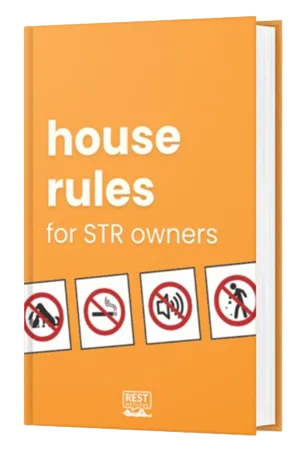
The house-rules template our team uses across the portfolio — clear enough to prevent problems, friendly enough to keep 5-star reviews coming. Copy it, tweak it, done.
🎉 Downloading now — we've sent a copy to your inbox too.
Book a free strategy call — we'll show you how our team would run and optimize your property, whether we work together or not.
Book a Strategy Call →