Scams in the short-term rental world are more common and damaging than ever. From copycat listings to payment loopholes, both hosts and guests are getting hit. In this eye-opening episode, we uncover the 7 most frequent STR scams and share the steps you can take right now to protect your business and your peace of mind.
- The copycat Craigslist scam (happened to us personally)
- Booking.com payment loopholes that cost you money
- Chargeback fraud from guests who actually stayed
- Stolen credit card bookings
- The dirty linens scam
- Cleanliness fraud (they use your place, then demand refunds)
- Third-party squatters who sublet your property
Whether you’re new to hosting or have hundreds of bookings under your belt, scam-proofing your short-term rental is no longer optional. Use these insights and practical tips to stay a step ahead. If you found value in this episode, don’t forget to share, subscribe, and explore our bonus resources below.
Resource Links:
Download the Growth Handbook: https://strriches.com/growth-blueprint/
Check out our videos on YouTube: https://www.youtube.com/@ShortTermRentalRiches
Grab your free management eBook: https://strriches.com/#tools-resources
Looking to earn more with your property (without the headaches)? Chat with our expert management team: https://strriches.com/management-services/
Scams and short-term rentals actually aren’t that rare, and unfortunately they’re rising. They don’t just impact hosts. Guests are also getting burned to, and so in this episode, we break down the most common SCR scams that have tricked. Thousands and show how both sides can stay protected.
We’ve got real stories, real lessons, and also a guide to help you scam proof your stays. Stay tuned.
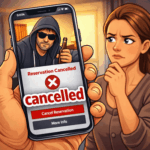
The first scam in this one is a classic. Classic in the sense that it’s been happening for years and years, and it happened to my team and I. This is the Craigslist copycat scam where they will literally copy your listing and post it for rent at a way lower price, and then try to get payment through PayPal or even through a check, which was the case that we had.
You get someone showing up here at your door that is not happy, and so of course this isn’t a good situation for anyone and we do need to be on the lookout for [00:01:00] copycat listing.
The second is the booking.com payment loophole. So if your property is listed on booking.com, which I hope that it is, because you can get a lot of reservations on there. You need to make sure that you’re listed properly. I’ve got some actionable tips for you in just a few minutes, but what happens is someone’s going to book your property on booking.com.
It’s going to be last minute. You’re going to send them check-in instructions because most of you have, it’s set up to go out automatically, even if the payment. Fails, and that’s where the issue happens. These booking.com reservations come in last minute. You send out the check-in information, they check into your property, and you find out shortly after that the payment that they processed actually failed.
Number three, this is the chargeback fraud. And this one’s really frustrating because you can have people stay at your property, you’re communicating with them, they’re having a great time, and then for whatever [00:02:00] reason, after they check out, they file a dispute likely because they know they may have the potential to win the dispute with the credit card company where they say they didn’t stay at your property and they get all of their money back.
These chargebacks happen when you are taking reservations through your own payment system. So most commonly, Stripe, and this could be reservations that come in from VRBO, from booking.com, from Google, from your direct booking website. If you are taking credit card payments, well then there is the potential for this scam.
Again, I’ve got some actionable tips to help avoid all these scams. But before we do, I want to jump in to a few more. The next one is a stolen credit card. So again, if you are taking payments, you’ve gotta do some verification.
Because if someone’s making a reservation with someone else’s credit card and they stay there, when the person that actually owns the credit card sees these charges, well they’re going to file a claim with a credit card company, and the credit card [00:03:00] company is almost always going to favor with their client.
In this case, they absolutely should, right? Because it’s a stolen credit card.
The challenging thing with these chargebacks is that they’re not necessarily gonna happen the day after someone checks out or the week after someone checks out. But you could see this showing up weeks after the actual reservation.
The fifth scam going around, and this is also one that’s happened for a long time. This is the linen and pest scam where someone will actually show up with dirty linens and use that as evidence to give to Airbnb or to give. To whatever listing channel they made their reservation from. Now we know sometimes these are hard to fight.
If it’s a pest one, you see someone send a picture and it’s got this tiny little spider. A lot of times the OTAs are siding with their guests. Unfortunately, again, I’ve got some tips to help you combat all this.
Number six is related, but a little bit different. This is the cleanliness scam where someone shows up, usually it’s a last minute [00:04:00] reservation, and within one to two hours they’re like, Hey, this place is dirty and they want a full refund. And what we found out is a lot of times. When this happens, people are actually using the property.
So maybe there’s a big event going on there, maybe Taylor Swift’s showing up, or maybe some other artist is in town or a sporting event and people are traveling in and they want a place to freshen up, maybe have some drinks or something before they head to the event. So they’re actually using the properties for a couple hours and then claiming that it wasn’t clean, trying to get a refund.
Now we’ve of course found this out through experience, right? So when someone’s used one of the apartments and then our housekeepers go in. Where the guests said they wanted to check out immediately because it wasn’t cleaned, we can see that they used the towels.
We can see that they used the shower. Well, hopefully these haven’t happened to you, but at some point or another, some scammy things are going to happen.
Now I saved the craziest one for last. Number seven. These are third party squatters. What do I [00:05:00] mean by this? Well, let’s say someone books your property, but they actually give access to someone else. It could be a family member, it could be a friend. It could be that they’re basically subleasing your property after taking that reservation.
Maybe they don’t have a. Host profile that they actually care about. And so this was an opportunity for them to get a little bit of money and just leave the scene. I know that this has happened. Again, some of these happen more on certain channels than other. I had a friend call me not too long ago with this actual one happening.
He said, Tim, there’s all these people in my property. Uh, the reservation was from booking.com. I can’t get in touch with them. And the people staying there like don’t even know the person that made the reservation. So of course we don’t want this to happen. Uh, this is probably the most stressful one, right.
Good news is there are quite a few ways to avoid all of these situations, and let’s go ahead and get into those.
The [00:06:00] first and most obvious and easiest one is just to review your guest’s profile and their history. If they have zero reviews and they made a last minute booking before some crazy concert, well, you have a little more reason to be alarmed.
But that doesn’t mean you want to be excluding first time guests. In fact, we did a whole episode on this. This was episode 2 91 where we talked about all the reasons where you do want to be accepting first time guests, but of course you want to have these checks in place that we’re gonna break down right now.
The second thing you can do if you’re getting risky reservations on booking sites like OTA or even a direct booking, is to not allow same day check-ins. So to have a little bit of buffer time to allow yourself to. Verify their ID to get a rental agreement signed to make sure you have a deposit. These are all proactive things we can do, and I know speaking from experience, we’ve managed tens of thousands of guests.
The times that we have these [00:07:00] scams pop up, it’s so, so small, but when it does pop up. It can be stressful, right? So, making sure that you have these checks in place is gonna make the whole operation a lot easier, a lot smoother.
We always like to have a rental agreement digitally signed, and so we get this before a guest checks in. It also states the rules, so the house rules for our property. Again, you wanna make sure that those are really well dialed in and if you don’t have your house rules dialed in yet, well you can get our free copy. The link will be in the show note.
If you’re getting a booking outside of Airbnb, make sure you have a copy of their ID and also get a selfie. Just because you have a picture of their ID and you have the name on their credit card, doesn’t mean they are the person in that id. So we take it one step further, we get a selfie so that we can match that up, and we ask for that at the time of booking. Of course, all this happens.
Before check-in, deposits go a really long way, so you either wanna make sure you have a deposit or you have a deposit waiver set up. We use a company called [00:08:00] Wavo.
Make sure you have exterior cameras. This is such an easy one to do. Make sure that your entrance door has one, not showing anything on the inside. But on the exterior, so you can see if the, the two guests on the reservation are showing up with an extra five guests, or if they’re showing up with pets, that’s a really easy one to do, and so is having a digital lock code that changes with each and every guest.
Don’t use a static code because someone can easily give that away to someone else.
You may decide to take it one step further and actually use a software specifically for guest verification. There’s quite a few out there. There’s Super Hog. There’s another one called Auto Hosts. Another one called Authenticate, where they can do a lot of this pre-screening for you. And of course, the more steps you have upfront, the more likely a scammer’s gonna get intimidated.
He’s gonna know that, or she’s gonna know that you know what you’re doing. You’ve heard of these scams before and you’ve taken the proper precautions.
[00:09:00] Lastly, make sure that you document everything. So if there’s any sort of issues going on, we like to have all written communication. That way we can easily pass it back to Airbnb or we can easily pass it back to any of the listing sites where the reservations were made. It’s a clear story of everything that happened.
And a couple quick tips for you guests out there. Well, if you’ve already been scammed, then fortunately you’ve probably learned your lesson. But don’t be booking things offsite, right? These Craigslist scams are too good to be true. If you’re booking a property that has no reviews, take a look at the host profile, ask a few questions and make sure that you’re better prepared before you book that property.
’cause this happens on both sides, right? We are in the hospitality industry, but. The reality is there’s millions and millions of short-term rentals out there. A lot of people are doing a really great job. They’re very honest, but there are some scammers out there. I hope this gave you a little bit more insight.
Until next time, I [00:10:00] hope you have a fabulous week.